


The Trump administration has no idea what to do about gas prices. The president began a war that experts have known for decades would cause a global energy shock and gasoline prices to spike in the United States.
Trump was reportedly briefed that his plan was going to raise gas prices, but he still went ahead with his war, and now that the national average for a gallon of gasoline is nearly $4.00 a gallon, the Trump administration is scrambling.
One of their actions has been to loosen sanctions on the export of Iranian oil, which will net the regime $14 billion at a time when they are at war with the United States.
The Daily is outside the Beltway journalism for the people. Please consider supporting our work by becoming a subscriber.
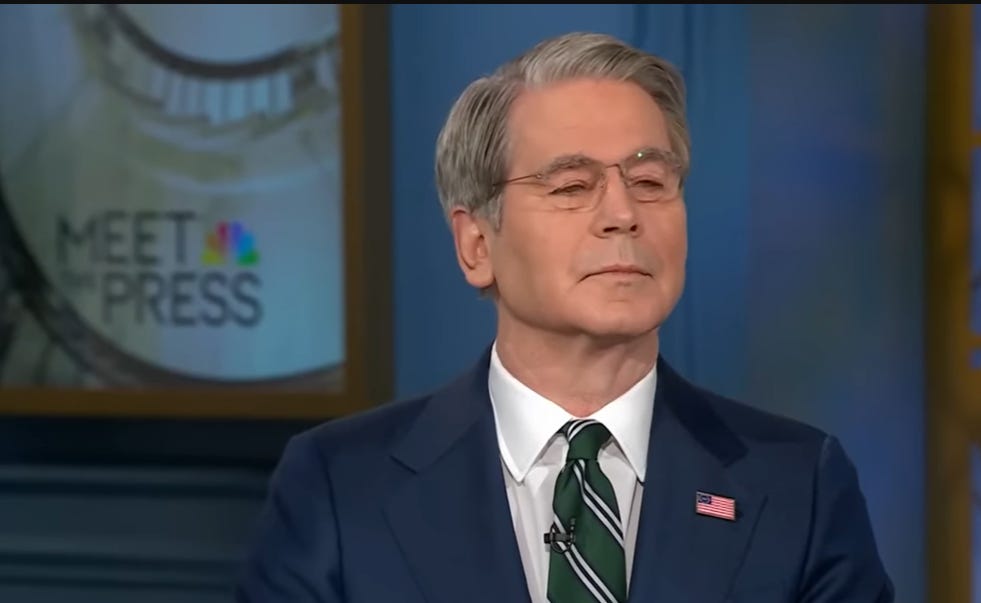
Treasury Secretary Scott Bessent appeared on Meet the Press, where he was asked a simple, common-sense question.
Kristen Welker asked Bessent, “All right. Let me talk about your announcement this past week. On Friday, the Treasury Department lifted sanctions on Iranian oil stored on tankers, a move that would effectively allow Iran to get more than $14 billion of oil revenue….Why is the U.S. helping to fund a country that it’s currently at war with, Mr. Secretary?”
Bessent answered:
Again, Kristen, why don’t we have good facts here? That Iranian oil was always going to be sold to the Chinese. It was going to be sold at a discount. So, which, which is better, Kristen? The uh, which is better? If oil prices spike to $150 and they were getting 70% of that? Or oil prices below $100? It’s better to have them where they are now. And to be clear, we had always planned for this contingency. About 140 million barrels are out on the water. In essence, we are Jiu-Jitsuing the Iranians.
The Trump administration’s answer to high gas prices is to give money to the country with which they started a war.
The policy itself is self-destructive, but Bessent’s answer was circular gibberish that only got worse as the interview went along.
