Sony Execs Say Blake Lively 'Did it to herself', Call Her 'F*cking Terrorist'
Blake Lively's threats to not show up for the film It Ends With Us unless she got what she wanted caused a Sony executive to call her a 'f*cking terrorist.'
A Sony executive called Blake Lively a “f*cking terrorist” and other Sony executives saying she smeared herself, according to new documents unsealed in Lively’s civil lawsuit against Justin Baldoni and the Wayfarer parties.
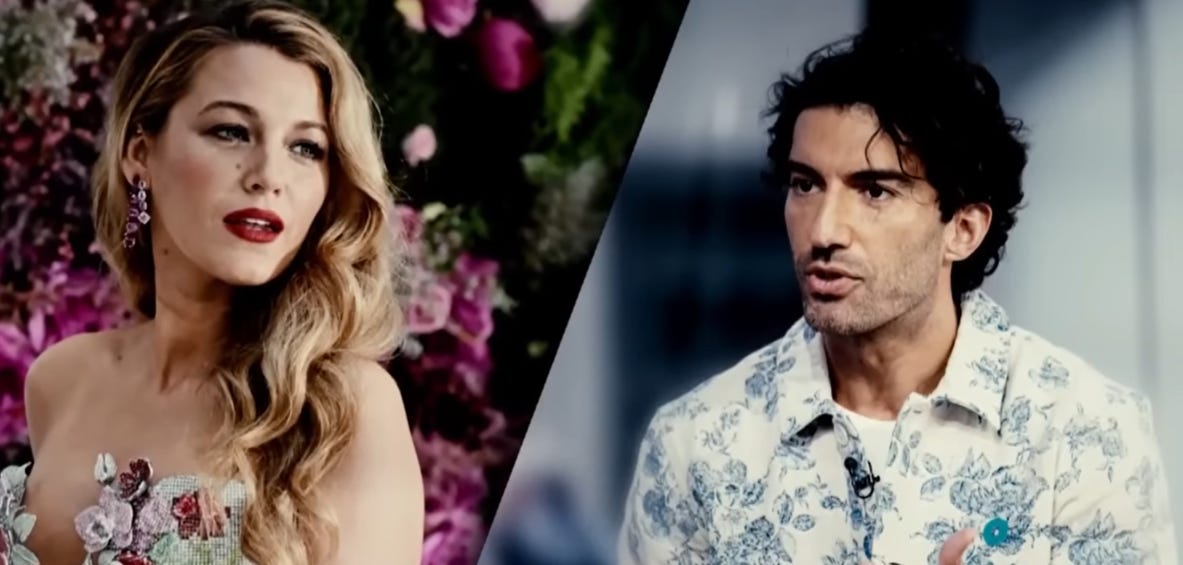
Blake Lively’s negative publicity was driven by her own conduct, Sony executives said in private messages from August, 2024 (page 114-115):
Sony executives were also captured in messages saying they think Lively’s career is done, and she shouldn’t have ordered the cast to unfollow Justin Baldoni and she should have “let him come to the premiere” (since when does the productions studio and director need an actor’s permission to come to their own premiere?). The public shunning is what got the internet sleuths digging into the drama.
They also thought she should have just apologized to journalist Kjersti Flaa and for her promotion of her drink lines, which amounted to her telling DV victims to grab their friends and wear their florals as if they were going to see Barbie, when the IEWU movie was actually triggering for many survivors.
The Daily is people-first journalism in a world of media centering and catering to elite power. We could use your support.
They thought she should have put aside the backlash and prioritized protecting the show. ‘Protecting the show’ is a value in the entertainment industry that everyone abides by, because it means the success of the show is above petty drama (see the Stranger Things red carpet drama that was quickly put to bed), because everyone involved is relying on the success of the show.
It’s not just the actors or producers. It’s everyone. A show that is undermined with cast drama or unfollowings is a show that might have been a lot more successful. This impacts everyone’s bottom line and often, even their next job opportunities.
The fact that this entire cast shunned Justin Baldoni at the premiere does not reflect well on them, but as a Wayfarer producer bemoaned in unsealed messages, no one on the set or either studio could control Blake Lively. She relentlessly upped her demands and they were powerless to stop her. When they tried, the documents show Lively reaching out to other unrelated actors and talents like Anna Wintour and Matt Damon to pressure Sony into doing things her way.
Their messages can be summed up with: “She did it to herself”
In other unsealed documents made available previously from August 2024, during the promotion of the film, Vice President of Operations at Wayfarer Studios Mitz Toskovic called Blake Lively and Ryan Reynolds “terrorists.”
Sexual Harassment
These kinds of revelations in a sexual harassment case can be deeply disturbing because they often represent the way our culture immediately blames women.
One result of this case is people realizing that using certain words does not by itself constitute sexual harassment. The sexual harassment laws are not some protective cloak that protects people from ever being uncomfortable at work. It could be argued that they do not do enough.
But as they are, thus far, Lively’s claims do not appear to rise to the level the legal standard — severe or pervasive — for sexual harassment, and the retaliation claims have also not been differentiated from defensive PR or substantiated as of yet, in spite of the New York Times article asserting a smear. To the contrary, there is evidence that the backlash was a she “did it herself” situation. So, two things can be true - the Internet loves to hate women, and Blake Lively failed to do the bare minimum to manage this PR crisis backlash created by her own actions and promotion decisions.
Lively’s newly unsealed messages with Taylor Swift show Blake crowing over Justin “falling for it” in early 2023 before principal photography began, after she says Swift lied about Lively’s experience in an effort to fool Justin Baldoni into seeing her as someone with more knowledge about film-making than she had. The timing of this message is informative, as it came before filming, and thus before any issues on set. It was clear that Blake Lively did not respect Justin Baldoni and did not think he should have the rights to the IP, but that was not her decision to make. It was his property and he had the right to make it as he saw fit.
In the unsealed depositions and messages, it has been made evident that while some of the cast felt safe with Justin while filming, many turned on him during the promotion of the film.
Cast members mocked Baldoni’s globally recognized religion the Baháʼí Faith and generally spoke about him in negative terms, but often lacked specific complaints. Blake called him a “clown” repeatedly.
The perceived meanness in some of these messages led social media users to label this case “MeanToo” instead of Me Too.
Power
In the documents, it appears as if Lively encroached on Baldoni’s right to a “Director’s Cut” and guaranteed time in the edit bay. This is a fundamental union protection for directors working under a Directors Guild of America (DGA) contract established in 1964. Lively appears to have demanded to be a part of this process and to start her own cut while he was still working on his cut. If this is true, it’s a shocking power grab and attack on the art of a director.
Lively also kicked Baldoni, the director/co-star/producer and production company off of the poster and centered herself. She pushed to remove his “A Film By” credit, which is usually a contractual obligation that is heavily negotiated in director agreements. Given that this was his own production company, he probably wasn’t going to sue over it, but this is yet another thing that is not done in the film world. It violates rules, agreements, and norms.
Lively’s demands were so far out of the norm that Sony President Sanford Panitch said they’d reached the level of “truly insanity” adding in newly released messages “we’ve bent over enough.” After Lively pressured Wayfarer to give her a producer credit, she then pushed to have her credit moved above other producers who had been on the project from the beginning years before she joined as an actress, including demands such as removing Justin Baldoni’s “A Film By” credit:
New to The Daily? Share us with others.
Justin Baldoni’s Wayfarer Studios acquired the rights to Colleen Hoover’s novel It Ends With Us in 2019, and developed the adaptation through his production company over many years of pre-production work. He owned the rights and he had the right to make it any way he saw fit, even if everyone hated it, although his cut scored higher than hers did according to the unsealed messages and documents.
The PGA of It All
Lively’s letter to the Producers Guild of America seeking a PGA mark was also unsealed, and in it she repeatedly claimed she deserved the coveted PGA mark as one of the main producers of the movie even though it had been a “herculean task” to get Wayfarer to give her a producer credit at all , listing various jobs she claimed to have undertaken (it is not clear that she was asked to do these jobs, but she was not hired to do them), including claiming to be Human Resources for the film.
If true, it means she is partially suing the Wayfarer parties over what could arguably be suggested is her own failure to respond to claims she has not documented were ever made to any HR department, as Sony has denied her making any HR claims to them.
Of course, sexual harassment claims don’t need to be made as a formal complaint. The issue is that sexual harassment laws are designed to protect powerless people from the abuse of power by higher ups, and on a set there is no one more powerful than a PGA marked producer. They are the people who get up on stage and collect the awards, after all. (Arguably, the people/entities financing the movie are equally powerful, though once principal photography starts, their influence wanes unless budgets skyrocket.)
But also in her “remarkable” PGA letter, Lively argues how invaluable she is being in crafting the promotion of the film, which later became such an issue of contention that she later denied any culpability for the promotion and tried to get Justin Baldoni to take responsibility for the marketing and promotion (Lively’s husband Ryan Reynolds was also involved in both).
If Blake Lively was one of the most powerful people on that set, according to her own words, and if she did, as alleged, refuse to show up for the project and to work unless and until she was given credit for work she was not hired or asked to do (repeatedly) and she was given influence to such an extent that she was given the ability to violate other people’s contractual rights and fire people she didn’t like, it will be difficult to argue that others had more power than her.
Me Too is Not a Weapon to Get Power
The bottom line for my readers is this case appears poised to culturally undo much of the work of the Me Too movement, and some of that is due to the way the mainstream media is carrying water for the powerful people in this litigation (WME, Ryan, and Blake by marriage).
Apparently it has to be said, but allegations of sexual harassment are not free pass to demand more power over a movie or refuse to show up to work when you’ve already agreed that your complaints were resolved, and they’re not a pass to poison an entire cast against someone in such a way that they act on that publicly in a way that undermines the work and lessens its value.
The issue of sexual harassment is separate from getting a huge raise and a title/credit for work you didn’t do, to put it into the parlance of non-film industry work. If the issue is raised and someone is offered a sweetener, that’s one thing, but here the issue doesn’t seem to have been raised formally but rather used as a potential threat along with not showing up for the film at all in order to wrest control and credit for personal gain.
The bottom line is this is not professional behavior and it did not protect the show. It is not girl bossing or standing up for women to use Me Too to take someone else’s work product and rights. Feminism is about equality, not superiority. It should be rooted in egalitarianism and recognition of intersectionality.
Every movement for progress meets this moment in the timeline where it’s being weaponized and used for power and attention by a few, like Jussie Smollett was accused of using Black Lives Matter. If we are at that moment (and I think we are, as others have tried this as well recently), it needs to be recognized by the people who support the movement.
The Me Too movement isn’t about infantalizing women by suggesting they need their husband to come in unbidden to their job to redo other women’s work (as happened here), and it’s not about claiming that we must believe all women no matter what the evidence shows. The rallying call of Believe Women was meant to overcome the immediate bias against women, to start off believing women and looking at their evidence when they present credible claims. It was meant to put women on a more equal footing, not hand them a loaded gun to metaphorically shoot anyone who offends them or says no to them.
The call “believe women” was meant to overcome the existing bias that most of the time women are not believed, unless and until multiple women come forward and even then, it’s iffy. It was meant to provide dignity to women who come forward. It is still needed and will probably always be needed.
But feminism is not a weapon of power to be used against a man because he owns the rights to a very successful IP with a second movie in the wings and a built-in audience. I hope that’s not what has happened here, but this is the story the evidence provided so far is suggesting, and it’s important that someone speak up for the vulnerable who need to be believed and thus need the Me Too movement to remain a respected movement. The mainstream media is not doing that.
The most important value here is not the individuals of Blake Lively or Justin Baldoni, but the principle of finally making progress against workplace sexual harassment and assault and the understanding of intersectionality and the potential for the weaponization of Me Too.
Today, January 22, 2026, a federal judge in the Southern District of New York will hear arguments on Justin Baldoni’s motion for summary judgment and motion to dismiss various portions of Blake Lively’s sexual harassment and retaliation lawsuit.
The lead up to this hearing involved “the great unsealing” of documents, which has brought into question the veracity of Lively’s sexual harassment and retaliation claims, and highlighted how executives perceived her as a “terrorist” with her demands and refusals to do her job unless she was given unusual benefits that seemingly encroached on others’ union-protected rights.
Lively filed a complaint with the California Civil Rights Department in December of 2024, months after the film premiered in August, alleging that Wayfarer created a hostile work environment through sexual harassment and boundary violations.
What do you think about the Lively/Baldoni case? Share your thoughts in the comments below.


This article is so one-sided it reads like it was written by Baldoni’s (Sony’s) lawyers as a hit piece. She was forced to do sex scenes that were not in the original script. That is rape Sarah.