


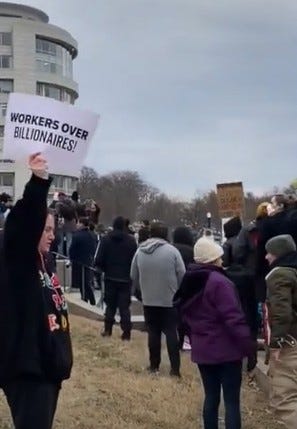
The New Deal era roots of the modern Democratic Party are based on working-class politics. What is often misunderstood is that FDR’s political values were not those of a working-class populist when he came into office. Roosevelt was originally a wealthy product of his era who believed in balancing the books and cutting the budget.
One of the presidency’s most fascinating dynamics is how problems and challenges can force presidents to adapt. The best presidents adapt. The worst presidents stay rigid and fail.
The Daily is working-class journalism from outside the Beltway. Please consider supporting our work by becoming a subscriber.
Roosevelt directed his policies toward the working class because his polio made him empathetic toward the struggles of others, but in policy terms, he was trying to pull the nation out of the Great Depression, and policies for the working class were the most direct path to both providing assistance to individuals and broader macroeconomic success.
FDR’s eye on the working class became wired into the Democratic Party’s DNA, and that was the way things stayed until the oil crisis, inflation, and stagflation of the 1970s, along with the decline in America’s post-World War II manufacturing dominance, opened the door for Ronald Reagan and Republicans to appeal to working-class voters with an argument that big government had failed them, and that conservatism and tax cuts were the way to go.
Even Barack Obama, running for president at the start of the Great Recession, couldn’t totally break the hold that Republicans had on working-class voters. Obama won working-class voters overall, but lost to John McCain 58%-40% with white working-class voters without a college degree.
However, new data reveals that Trump’s second administration has been such a disaster for the working class that they are shifting back to Democrats.